Dekoloniale Memory Culture in the City
Starting in Berlin, the pilot project Dekoloniale Memory Culture in the City (Dekoloniale) explored the possibilities for a responsible and critical engagement with colonialism and its consequences in the cultural sector from 2020 to 2024. The project was conceived and implemented by Berlin Postkolonial e.V., Each One Teach One e.V., the Initiative Black People in Germany, and the Stiftung Stadtmuseum Berlin; and funded by the Berlin Senate Department for Culture and Europe and the German Federal Cultural Foundation. This means that the project, which explored new ways of cooperation between civil society, institutions, and administration, was largely supported by Black, Afro-diasporic, and African actors who have fought for years for a critical engagement with colonialism.
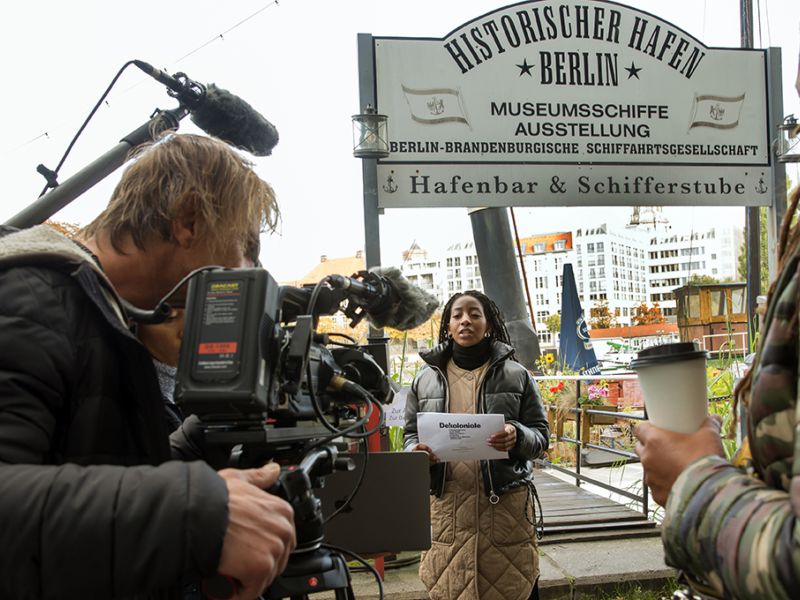
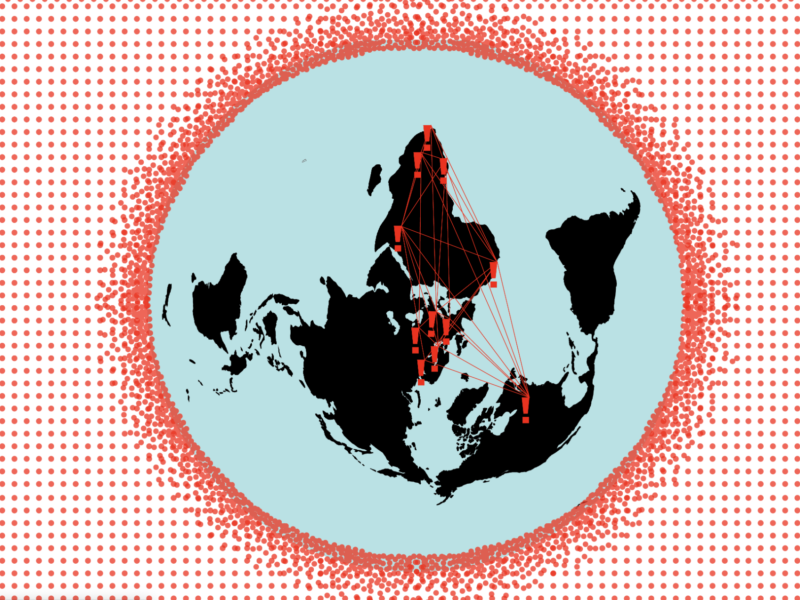
As a participatory and solidarity-based project in the field of historical-political education, our goal was to work with experts and activists around the world to explore and make visible the past and present of (anti-)colonialism in Berlin, in other parts of Germany, and in Germany’s former colonies. Colonial history is always also a history of global entanglements: the histories of lives, places, objects, and institutions link Europe with Africa, Asia, Oceania, Australia, and the Americas.
Using Berlin as a case study, Dekoloniale Memory Culture in the City tested a model for how a metropolis – its spaces, institutions, and society – could be examined on a broad scale and in relation to (post-)colonial continuities. It aimed to reveal what remains obscured — and to reframe dominant narratives of the visible.
This participatory cultural project addressed a broad and diverse urban society. It did not merely question individual actors or sectors – such as museums – about their (post-)colonial realities. Over the course of the project, Dekoloniale mobilized the entire city through its own initiatives and through collaborative partnerships.
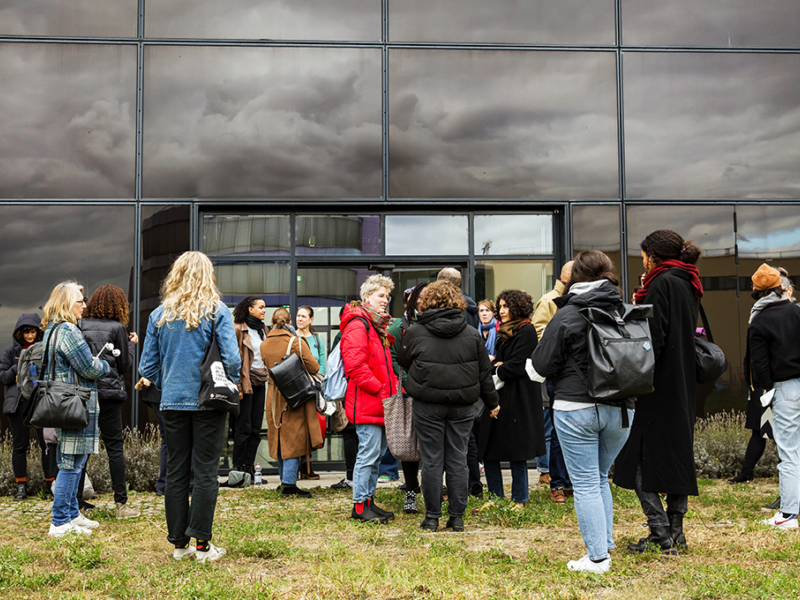
Dekoloniale Memory Culture in the City was a joint project of Berlin Postkolonial eV , Each One Teach One - EOTO eV , Initiative Black People in Germany - ISD-Bund eV and the Stiftung Stadtmuseum Berlin . In addition, we cooperated closely with the German Museum of Technology and the Berlin district museums in Treptow-Köpenick, Friedrichshain-Kreuzberg, Charlottenburg-Wilmersdorf and Berlin-Mitte. The project is funded by the Berlin Senate Department for Culture and Europe and the German Federal Cultural Foundation.
Structure of the Project
Each project year focused on a different area of the city: from the city center (2020) to the east (2021), south (2022) and west (2023) to Mitte-North (2024). The project scope covered historical and artistic exhibitions, conferences, workshops, event series, festivals, city tours, artistic interventions in public space as well as the ongoing digital mapping of (post)colonial history. In accordance with their respective programmatic focus, these activities were assigned to one of the four project sections: Dekoloniale [Hi]stories, Dekoloniale In[ter]ventions, Dekoloniale [Re]presentations and Dekoloniale Development[s].
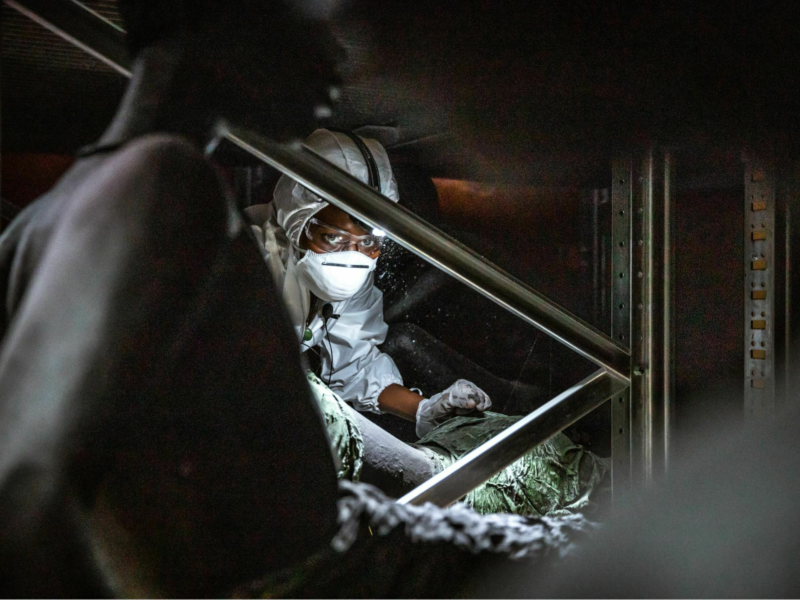
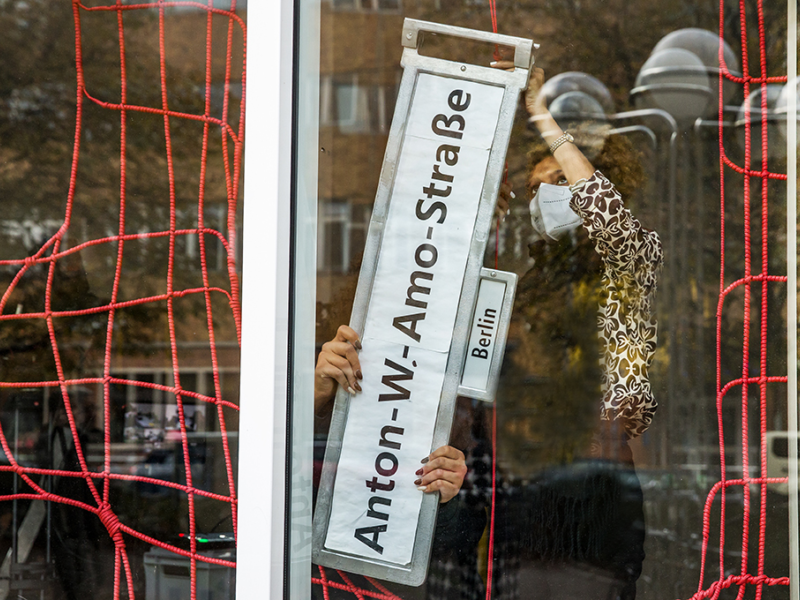
Project Space
Wilhelmstrasse 92
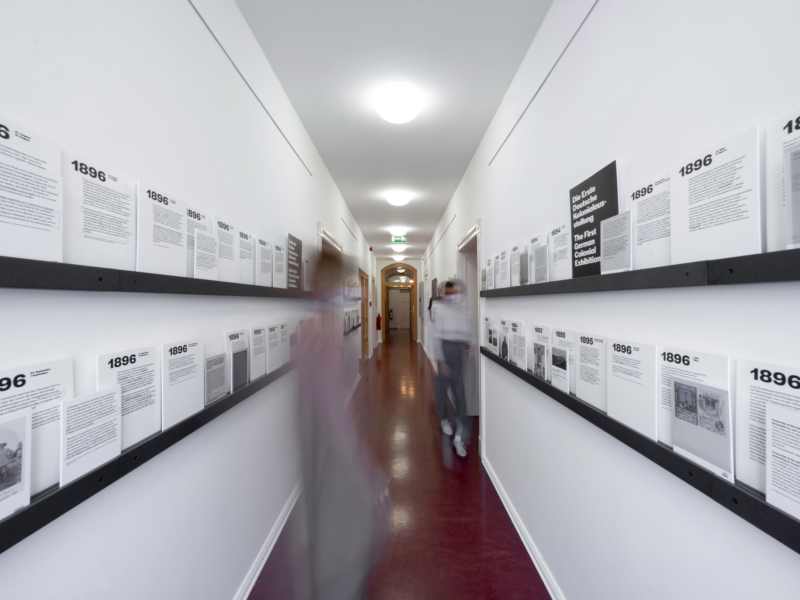
By lucky happenstance, Dekoloniale Memory Culture in the City had the opportunity to rent a work, seminar, and event space directly at the historical site of the Berlin Conference—today Wilhelmstraße 92—back in 2020. Over the course of the project, this space on the site of the former Reich Chancellery was able to establish itself as a place for critical engagement with the colonial past. Showcase exhibitions such as Remembrance. Apology. Reparation. (2024) and numerous public events made accessible the stories of this highly symbolic location and voiced demands for recognition of the resistance against German and European colonial crimes.
Unfortunately, the Berlin Senate Department for Culture and Social Cohesion and the Stiftung Stadtmuseum Berlin did not succeed in securing this highly symbolic space beyond the duration of the project. At the request of the private owner of the property, the project headquarters had to be vacated at the turn of the year 2024/25 after the owner did not agree to an extension of the contract—it seems for political reasons. The model project Dekoloniale Memory Culture in the City also marks the end of the historical and political use of the site, which stands for Europe’s colonial injustice in Africa like no other. Its loss tears a deep hole in Berlin’s post-colonial landscape of memory and shows, once again, the long and rocky road ahead to an appropriate representation of Black and African history in Germany and Europe.
Team
Anna Yeboah
General coordination
Maike Pertschy
Commercial management
Nadja Ofuatey-Alazard
Dekoloniale in[ter]ventions
Christian Kopp
Dekoloniale [hi]stories
Dekoloniale [re]presentations
Ibou Diop
Dekoloniale development[s]
Tahir Della
Dekoloniale development[s]
Melissa Makele
Managing Editor Publications
Desirée Desmarattes
Subproject Coordination Dekoloniale in[ter]ventions
Noor-Cella Bena
Subproject Coordination Dekoloniale in[ter]ventions
Mirja Memmen
Subproject Coordination Dekoloniale [hi]stories
Jana Sauer
Project assistance
Deiara Kouto
Project assistance
Yohanna Berhe
Project assistance
B'net Nadya Rahal
Project assistance - Dekoloniale in[ter]ventions
Former Colleagues
Noah Anderson (Coordinator Project Section In[ter]ventions), Leandra Bitahwa (Scholarship Recipient), Marc Sebastian Eils (Assistant Project SectionDevelopment[s]), Sajini Kodituwakku (Scholarship Recipient), Angelina Jellesen (Coordinator Project Section In[ter]ventions), Bebero Lehmann (Coordinator Project Sections [Hi]stories & [Re]presentations), Maithy Mouné(Interim Commercial Management), Maresa Nzinga Pinto (Junior CoordinatorProject Section [Hi]stories)
Cooperation Partners
Advisory Board
Members
Prof. Dr. Iman Attia
Alice Salomon Hochschule Berlin
dr Manuela Bauche
Free University of Berlin
dr Memory Biwa
University of Namibia, Windhoek
Prof. Dr. Sebastian Conrad
Free University of Berlin
Prof. Dr. Albert Gouaffo
University of Dschang
Sabine Herrmann
Federal Archive Koblenz
dr Noa K.Ha
German Center for Integration and Migration Research, DeZIM
Léontine Meijer-van Mensch
State Ethnological Collections of Saxony
Prof. Wayne Modest
Vrije Universiteit, Amsterdam
Paulette Reed Anderson
Center for African Diaspora Research in Germany, Berlin
Sylvia Werther
Berlin Development Policy Advice, BER