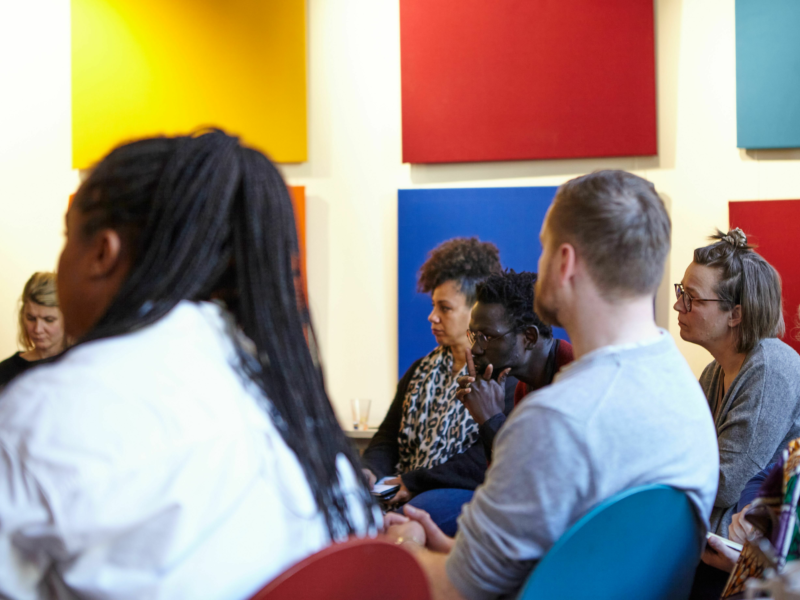
in the museum
In addition to working closely with selected Berlin district museums to produce annual special exhibitions as part of Dekoloniale [re]presentations, we offered other interested museums consulting services on coloniality and decolonization. Our services originally included on-site visits, needs-based consultations, and curatorial commentary on existing or planned special and permanent exhibitions. However, given the strong interest from museums in 2020, we expanded this part of the project.
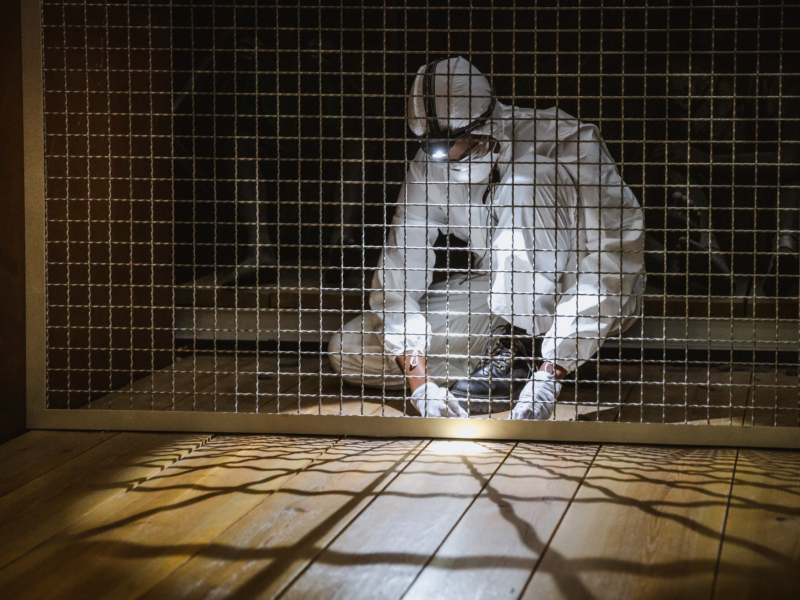
Firstly, this concerns our participation in the model project "Colonial History in the German Museum of Technology – A New Approach to the Brandenburg-Prussian Slave Trade," which centered on the performative dismantling of an inappropriate art installation depicting the abduction of West African people to the Americas. This installation had already been sharply criticized by the civil society organizations supporting the Dekoloniale years ago.
We collaborated with the artists Monilola Olayemi Ilupeju and Philip Kojo Metz. In their performances "Wayward Dust" and "SEK (SORRYFORNOTHING EINSATZ KOMMANDO)," respectively, they celebrated the dismantling of the problematic installation and the associated creation of a space for long-overdue social debates about colonialism and its continuities. The performances were shown live on a giant screen at the annual renaming ceremony for Berlin's M-Straße on Hausvogteiplatz on the International Day of Remembrance of the Abolition of the Slave Trade and its Victims (August 23, 2020).
This collaboration continued with four workshops for museum staff moderated by Miriam Camara, hosted by invited experts Paulette Reed-Anderson, Mahret Ifeoma Kupka, and Susanne Wernsing. These workshops addressed the history of slavery in Prussia, the relationship between technology and colonialism, and the search for paths toward a sustainable process of decolonization, not only of the permanent Maritime Exhibition, but of the entire Museum of Technology.
Round museum tables on coloniality and decolonization
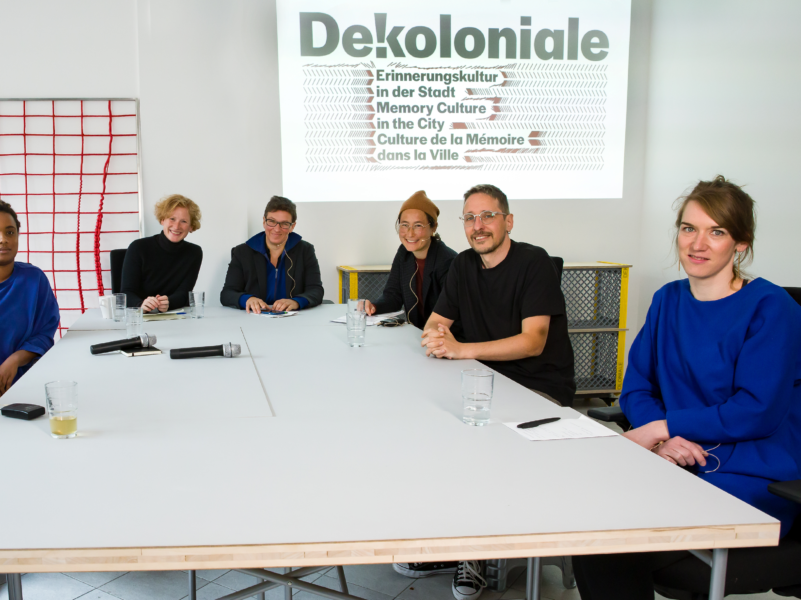
Together with the Working Group of Berlin Regional Museums (ABR), we have established a roundtable of Berlin's district museums. It meets every three to four months to discuss the critical reappraisal of the district's colonial history, its communication, and the networking of relevant activities of the participating institutions.
Finally, a quarterly round table has now been established on the topics of coloniality and decolonization for the larger museums in the state of Berlin, in which interested museums from other federal states are also participating. In addition to our cooperation partner from the Deutsches Technikmuseum, the Museum für Naturkunde (Natural History Museum), the Brücke Museum (Bridge Museum), the Botanical Museum, the Museum für Kommunikation (Museum of Communication), and the Prussian Palaces and Gardens Foundation are also participating. From other federal states, the Museum Folkwang in Essen, the Focke Museum in Bremen, the German Port Museum in Hamburg, and the Museum of Applied Arts in Frankfurt are participating.
Cooperation project “Museum Management and Communication” with the HTW Berlin
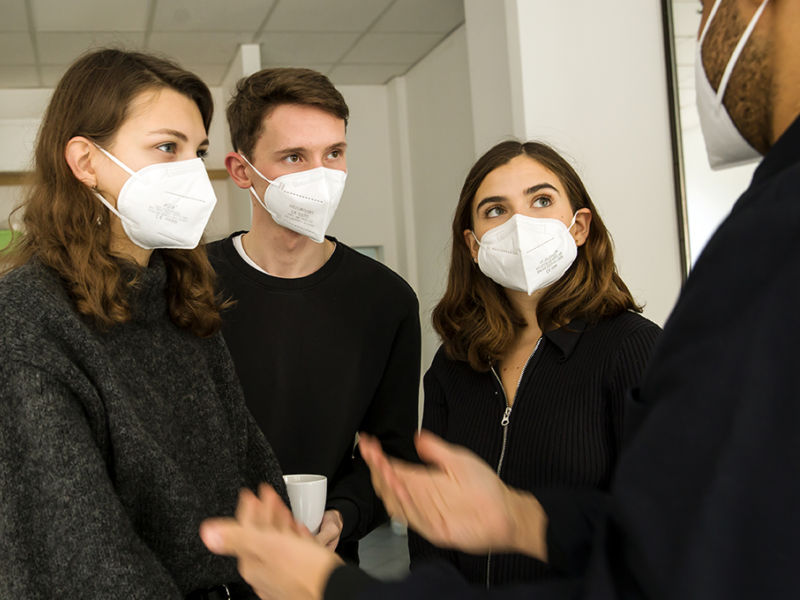
A group of master's students in "Museum Management and Communication" at the Berlin University of Applied Sciences (HTW) is currently developing new content for the exhibition "zurückGESCHAUT" as well as their own (online) offerings in cooperation with Dekoloniale and the Museum Treptow.
The permanent exhibition at Museum Treptow, which opened in 2017, critically examines the "First German Colonial Exhibition," which took place in Berlin's Treptow Park in 1896. Students are exploring the topics of "Colonial Continuities in Urban Space" and "Clothing and Resistance." They are also producing several short making-of videos for the revised exhibition "zurückGESCHAUT," which will reopen at Museum Treptow on October 15, 2021.
The collaborative project will span two semesters. The students will present their results in February 2022 as part of the "EinBlicke" program at HTW Berlin.
Workshop series "Decolonization of Museums" 2023
In April 2023, we launched the four-part workshop series "Decolonizing Museums." Together with the Mitte Museum, the Botanical Garden / Botanical Museum, and the Brücke Museum, which had previously applied for the workshop series, as well as twelve museum-makers from various Berlin institutions, we explored the overarching question of how decolonial museum practice can be realized. Between April and July 2023, one workshop each took place in each of the three museums, as well as a concluding workshop. In these workshops, participants explored issues central to the work of each museum. At the Mitte Museum, strategies for museum classification, presentation, and communication were discussed, using the museum's colonial-racist objects as examples. The workshop at the Botanical Garden / Museum focused on making colonial contexts visible and addressing decolonization processes in ongoing (and essentially unchangeable) permanent exhibitions. Finally, at the Brücke Museum, participants explored how the process of decolonization can succeed in an institution dominated by traditional routines and limited-term projects. In the concluding workshop, the key findings of the entire workshop series were compiled and discussed.
The project is a collaboration between the Development[s] sub-area of the pilot project Dekoloniale Memory Culture in the City and the Competence Center for Decolonization of the Stiftung Stadtmuseum Berlin and the Berliner Museumsverband eV